01 — Project Goal
The initiative aimed to reduce friction in tourist rental scenarios while aligning with operational needs and long-term scalability.
The work was guided by three key objectives:
02 — Problem
The current self-service flow requires users to download an app, register, locate a vehicle, and complete rental steps independently. This creates significant friction for first-time users and group-based scenarios.
In real-world tourist contexts, users prioritize convenience and flexibility. Many prefer operator-assisted experiences rather than managing logistics themselves.
"Participants do not want to manage the rental process themselves. Tourism experiences work better when the operator organizes the ride and participants simply join."
03 — Challenges

04 — Solution
Rather than forcing tourists through a self-service flow, the new model empowers operators to manage orders on behalf of groups. This shifts the complexity to the right person — the operator — and reduces friction for participants.

Operators create and manage orders for group rides before participants arrive. They define ride location, confirm details, and track vehicle locations.

Tourists join rides through operator orders and start riding with minimal setup. They provide only a phone number — no full account registration required.

05 — Design Process
Initial wireframes served as a communication layer, helping engineers understand process logic and reducing implementation ambiguity. Getting alignment early prevented costly revisions later.

06 — Trade-offs
The existing system was adapted instead of creating a separate lightweight application. This accelerated delivery and avoided fragmented maintenance.
First version recorded orders as outstanding payments. Cash-payment functionality was integrated in a later phase — shipping the core flow first.


07 — Final Interface


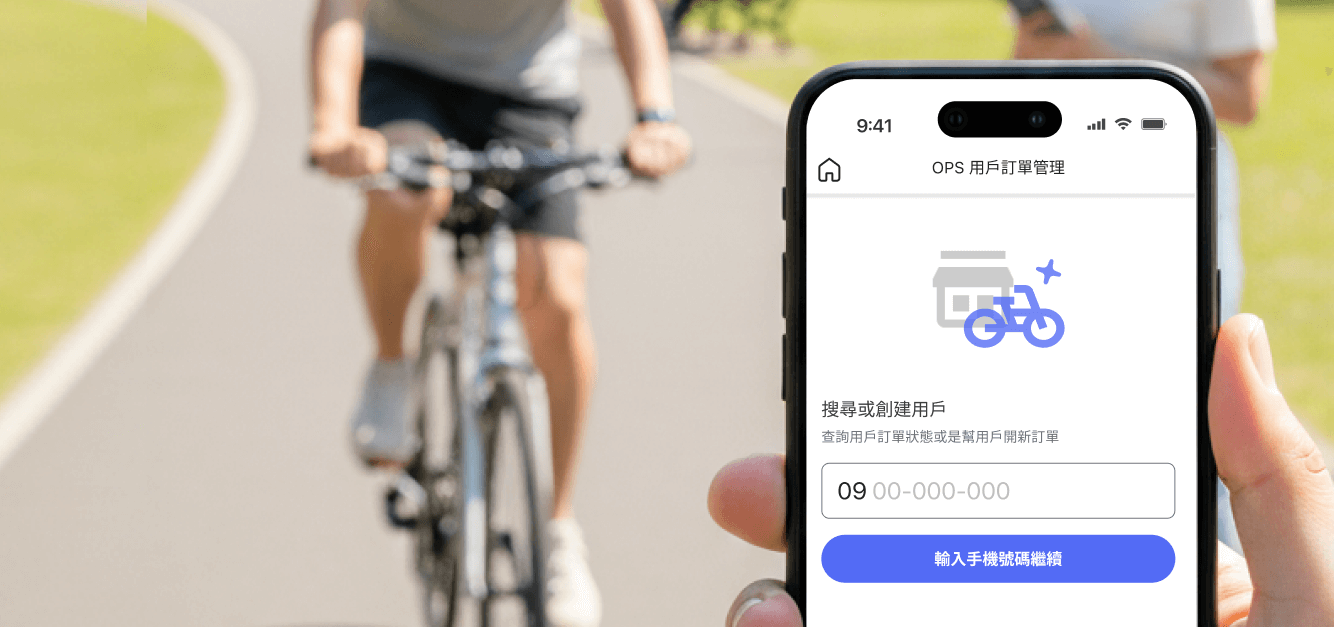
Prefilled phone number prefix eliminates redundant typing
QR scanning for faster return confirmation
Contextual text guidance clarifying page function
08 — Results & Impact
33×
Increase in revenue per transaction (NTD 15 → NTD 500)
+50%
Order volume increase in tourist locations
1.5–2h
Average ride duration (up from ~20 min)
The project shifted focus from isolated user needs to enabling scalable rental models. Tourist locations with the new operator flow saw over 50% higher station utilization.
09 — Reflection
"Proactively aligning timelines and sharing progress with internal team members improved communication, built trust, and helped move the project forward more smoothly."
This project reinforced that great design work isn't just about the artifacts — it's about the relationships and clarity you build along the way.


